
AI content is everywhere. From blog posts to student essays, AI writing tools are common. This creates a new problem. How do we identify machine-generated text? The answer is an ai detector. This guide explains what an ai detector is. You will learn how it works. We cover its uses and its major limitations.
What Is an AI Detector?

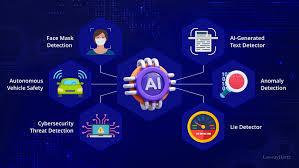
An ai detector is a software tool. Its goal is to spot text written by artificial intelligence. Tools like ChatGPT, Gemini, and Claude produce human-like writing. Ai detectors try to find the hidden fingerprints of these models. They analyze writing patterns. They look for statistical clues that suggest a machine origin.

These tools are crucial for educators, publishers, and employers. They help maintain integrity in a world filled with AI content. The need for reliable ai detector technology grows daily.
How Does an AI Detector Work?
Ai detectors use machine learning, just like the AI writers they try to catch. They are trained on massive datasets. These datasets contain both human-written and AI-generated text.
The tool scans your submitted text. It searches for specific giveaways:
- Perplexity: This measures how predictable a text is. AI writing is often more predictable. It uses common word patterns. Human writing has more surprising, creative choices. Low perplexity can flag AI content.
- Burstiness This analyzes sentence structure variation. Human writers mix long and short sentences. Their rhythm is irregular. AI text often has uniform sentence length. This creates a consistent, robotic rhythm.
- Semantic Analysis: Some advanced detectors understand meaning. They check for factual emptiness or generic phrasing. AI text can be vague. It might lack personal anecdotes or deep expertise.
The ai detector combines these signals. It then gives a probability score. The result might say “99% likely AI-generated” or “likely human.”
Common Types of AI Detectors
Not all ai detector tools are the same. They serve different purposes.
- Plagiarism Checker Integrations: Platforms like Turnitin and Copyleaks have added ai detector features. They are common in academic institutions. Their focus is on student submissions.
- Standalone Web Tools: Sites like GPTZero, Writer.com’s AI Detector, and Originality.ai are popular. Users paste text directly into a website box. They get an instant analysis. These are used by bloggers, marketers, and freelancers.
- API-Based Detectors: Large platforms use these. Content management systems or hiring platforms integrate the ai detector directly. It runs automated checks in the background.
Why Are AI Detectors Important?
The debate about AI ethics is significant. Ai detectors play a key role in several areas.
- Academic Integrity: Schools and universities face a challenge. Students may use AI to write essays. An ai detector helps educators identify potential cheating. It encourages original student work.
- Content Publishing: Google values helpful, original content. Websites risk penalties for publishing mass AI content. Publishers use ai detector tools to screen submissions. This ensures quality and authenticity.
- .SEO and Marketing: Search engines may downgrade low-value AI content. Marketers use detectors to audit their own work. They ensure their content maintains a human touch for better engagement.
- Trust and Transparency: Readers deserve to know a content’s origin. Using an ai detector promotes honesty. It builds trust with an audience.
A study from Stanford University highlights the challenges educators face with AI writing. It underscores the need for effective tools.
Major Limitations and Criticisms
Ai detector tools are imperfect. Relying on them completely is risky. High error rates are a serious problem.
- False Positives: Human-written text can be flagged as AI. This is especially true for non-native English writers. Their predictable grammar can trick the detector. Simple, clear professional writing is also often misclassified.
- False Negatives: A skilled human can prompt AI to produce less detectable text. They can instruct it to vary sentence structure. Adding minor human edits can easily bypass many detectors.
- Evolving AI: Large language models are improving rapidly. They are learning to mimic human perplexity and burstiness better. As AI gets more human-like, detectors become less accurate. It is an endless arms race.
- No Legal Standing: A detector’s result is not definitive proof. It is a probability estimate. It should not be the sole basis for an accusation of academic misconduct.
https://www.effectivegatecpm.com/zpmkd5fy02?key=01a6b6550186371efc2b62a395b389ee
The Future of AI Detection
Detection technology must evolve. The future likely involves hybrid approaches.
Future tools may combine text analysis with metadata checks. They might analyze writing process data (keystrokes, edit history). Watermarking AI output is a proposed technical solution. Companies like OpenAI have researched cryptographic watermarks for AI text.
The best approach may be proactive. Institutions should focus on clear AI use policies. They should design assignments that value critical thinking over simple content generation.
Conclusion: Use as a Tool, Not a Judge
So, what is an ai detector? It is a probabilistic tool for identifying AI-generated text. It works by analyzing statistical patterns like perplexity and burstiness.
Its importance in education and publishing is undeniable. However, its limitations are severe. False positives and false negatives are common.
Use an ai detector as a guide. Use it to start a conversation, not end one. Do not use it as absolute proof. The most reliable method remains human judgment. Critical thinking and knowledge of a student’s or writer’s usual voice are irreplaceable.
The landscape of AI writing is changing fast. Ai detector tools will continue to be part of the conversation. They must be used with caution, understanding, and a focus on ethical principles. For ongoing research on AI accountability, follow resources like the MIT Technology Review.
FAQs
An AI detector is a specialized software tool designed to analyze text and determine the likelihood it was generated by an artificial intelligence program, such as ChatGPT or Gemini. It looks for statistical patterns indicative of machine writing.
AI detectors use machine learning models trained on vast amounts of human and AI text. They primarily analyze two key metrics: perplexity (predictability of word choice) and burstiness (variation in sentence structure). AI-generated text tends to be more uniform and predictable, which these tools flag.
Yes, absolutely. They are prone to false positives (flagging human writing as AI) and false negatives (missing AI-generated text). Simple, professional, or non-native English writing is often misclassified. Their results are probability scores, not definitive proof.
They are crucial for maintaining integrity in several fields:
Education: Helping educators identify potential AI-assisted plagiarism.
Publishing: Ensuring content originality and quality for websites and media.
Business: Auditing marketing copy and maintaining authentic communication.
Academic Integrations: Tools like Turnitin or Copyleaks built into learning systems.
Standalone Web Tools: Platforms like GPTZero, Originality.ai, and Writer.com.
API-Based Services: Detectors integrated into other software for automated checks.



I found a Great Knowledge in this article thanks To Aiteachy for such a superb Article.